Health and wellness niche report: 50+ Niche Ideas, Trends & Tips
The health and wellness niche is one of the biggest markets you can build a website in, and one of the hardest to rank in. The broad health niche belongs to big publishers, so the real opportunity for a new site is in the sub-niches. In this report you’ll find:
– Market trends for the wellness niche
– How to pick a profitable sub niche or micro niche
– How to make money in this niche
– 50+ health and wellness niches with less competition
– What “health niche edits” are, and why I’d be careful with them


Section 1
Health and Wellness Market

Section 2
Health And Wellness Niche Trends

Section 3
How To Pick a Profitable Sub-niche
Section 1.
Health and wellness niche Market.
In this section, you will learn some market insights.
How big is the health and wellness niche? Huge. In its 2025 wellness research, McKinsey puts US wellness spending at more than $500 billion a year, growing 4 to 5 percent annually, and the global market at around $2 trillion.
Part of that growth comes from chronic lifestyle diseases. When more people are told by their doctor to change their habits, more people go online looking for recipes, workouts and supplements. That’s search demand you can serve.
The biggest categories inside the wellness niche are personal care, beauty, nutrition, wellbeing and fitness. That last one is why you’ll often hear it called the health and fitness niche.
Wearables push it further. Fitness bands, smartwatches and sleep trackers create a whole new set of questions that people type into Google every day.
The graph below shows how millennials and Gen Z spend more on health and wellness than older consumers. According to the same McKinsey research, Gen Z makes up about 36% of US adults but is behind more than 41% of yearly wellness spending.
Then there’s wellness tourism. The Global Wellness Institute expected it to cross $1 trillion in 2024, which is close to 1 in every 5 dollars spent on travel worldwide. People are paying for retreats, spa trips and hiking holidays that leave them rested.
Is this niche going anywhere? I don’t think so. Of all the lifestyle niches (food, travel, fashion, home, personal finance), health is the one I’d bet on to keep growing.
Section 2.
Health and wellness niche trends.
In this section, I will analyse the current trends in this niche.
Market trends tell you how a niche is doing. More precisely, they show you how interest changes over time.
When interest grows and then stays up, that’s usually a good sign. It’s not the only thing to check, though. More on that later.
I’ll use Google Trends to look at the health and wellness niche. Before you start, you need to know the difference between two options:
- A search for terms shows matches for all the words in your query.
- A search for topics covers a group of terms that share the same concept, so the result is broader.
‘Topics‘ are the better way to measure interest in a whole niche, so use them to decide which niches are worth pursuing. ‘Search terms’ come later, when you’re planning content and want to know if a specific keyword is still worth writing about.
For this report, the topic is ‘Health,’ since wellness falls under the same concept. I set the location to worldwide and the period to the past five years.
As you can see below, the trend was stable for years, spiked during the Covid outbreak, and kept a high level of interest afterwards. That’s what a solid market with plenty of room looks like.
Health and wellness is the high-level niche. Try to build a site around the whole health niche and you’ll find it saturated, like any other broad niche. So if you’re set on this market, niche down as far as it makes sense. You could go as specific as medical device industry trends.
So how do you find profitable sub-niches? With proper niche research.
I’ll show you how in the next sections. Just bear with me.
In the meantime, this post covers all the advantages of niche marketing.
Section 3.
How to Pick a profitable Sub-Niche in Health and Wellness.
Learn how to find a niche step by step.
There are plenty of ways to find a good sub niche in health. The simplest one I know is to combine Wikipedia and Google Suggest to get ideas, and then check them in Google Trends.
Here’s how:
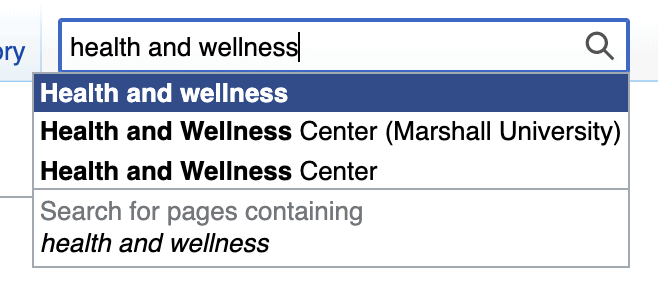
Step #1. Go to Wikipedia and type your niche idea in the search bar:
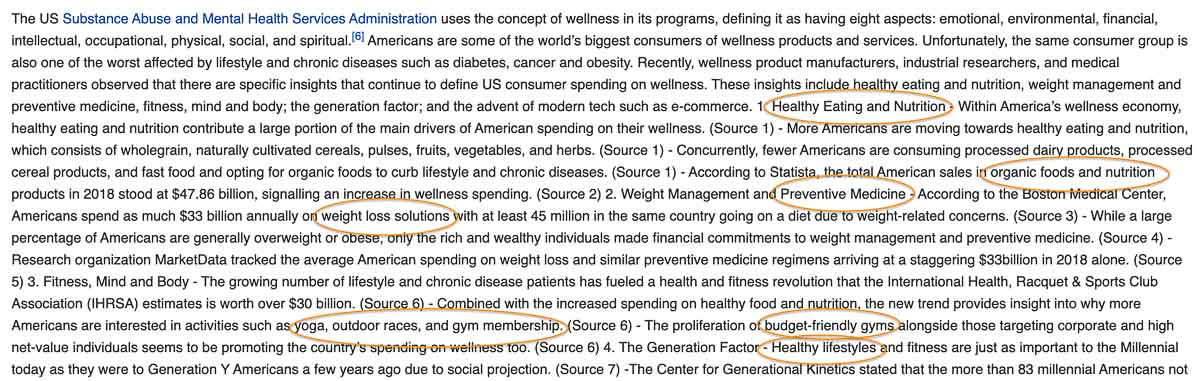
Step #2. Skim the page for sub-niche ideas:
Step #3. Go to Google.com and type your niche keyword. Google will suggest some sub-niches straight away.
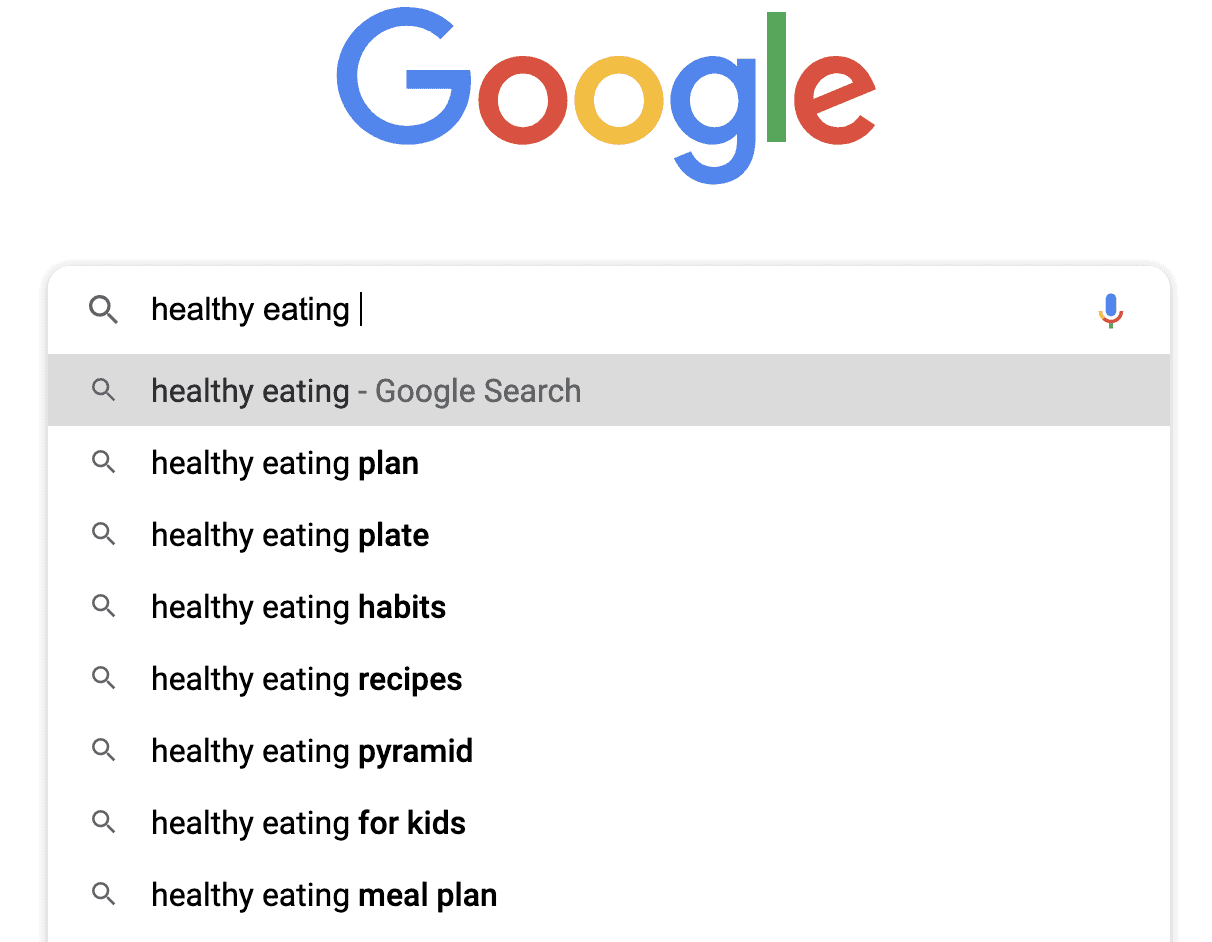
Keep typing and it will niche them down even further:
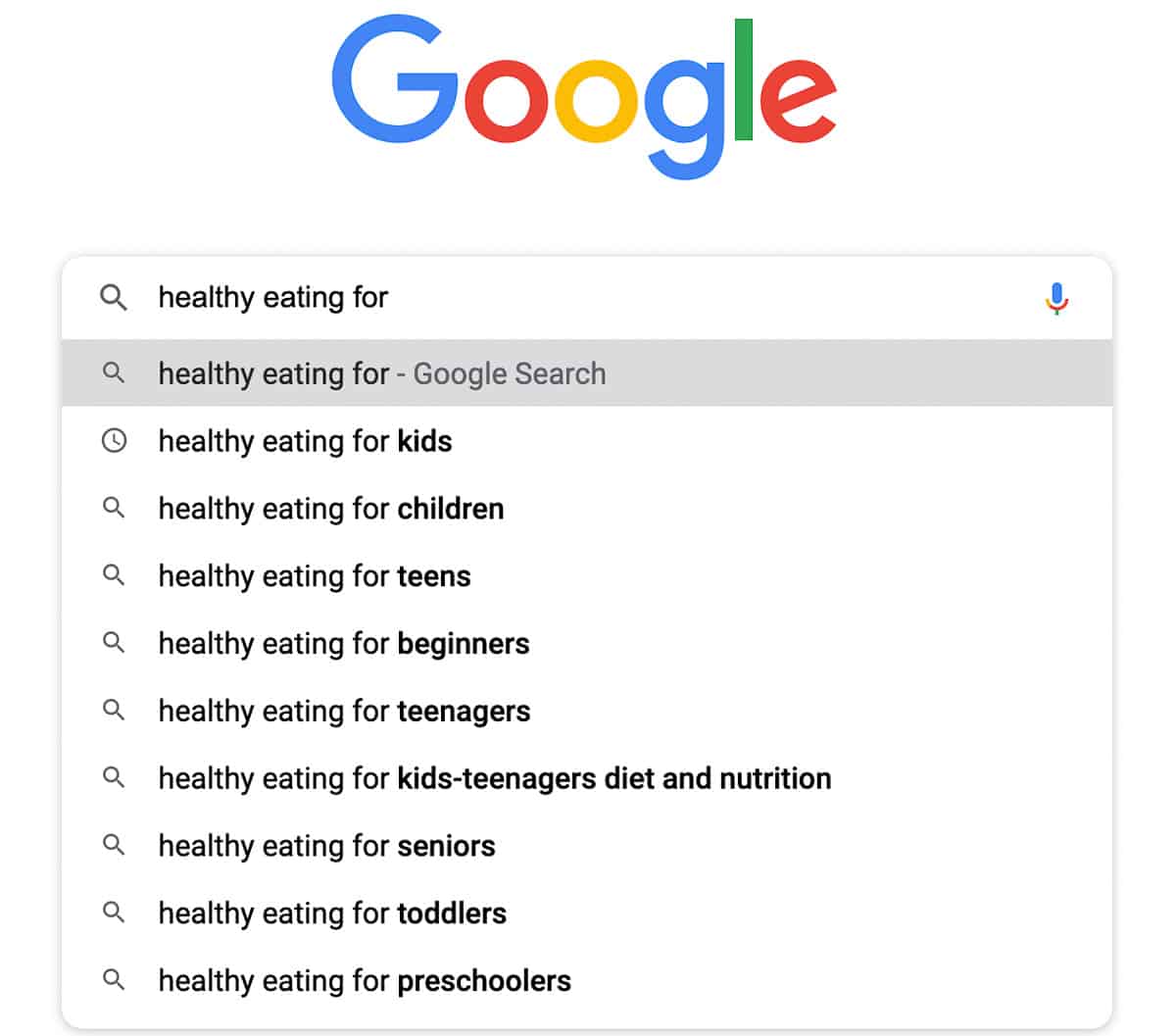
It takes two minutes and works for any industry.
The last step is to validate the niche in Google Trends. In this example, ‘healthy eating‘ is a search term, because Google Trends doesn’t treat it as a topic. The matching topic is ‘healthy diet.’
The graph below shows a stable trend with a good number of people interested over time.
Scroll down and you’ll find related topics and queries. They’re a quick way to spot niches that are trending right now.
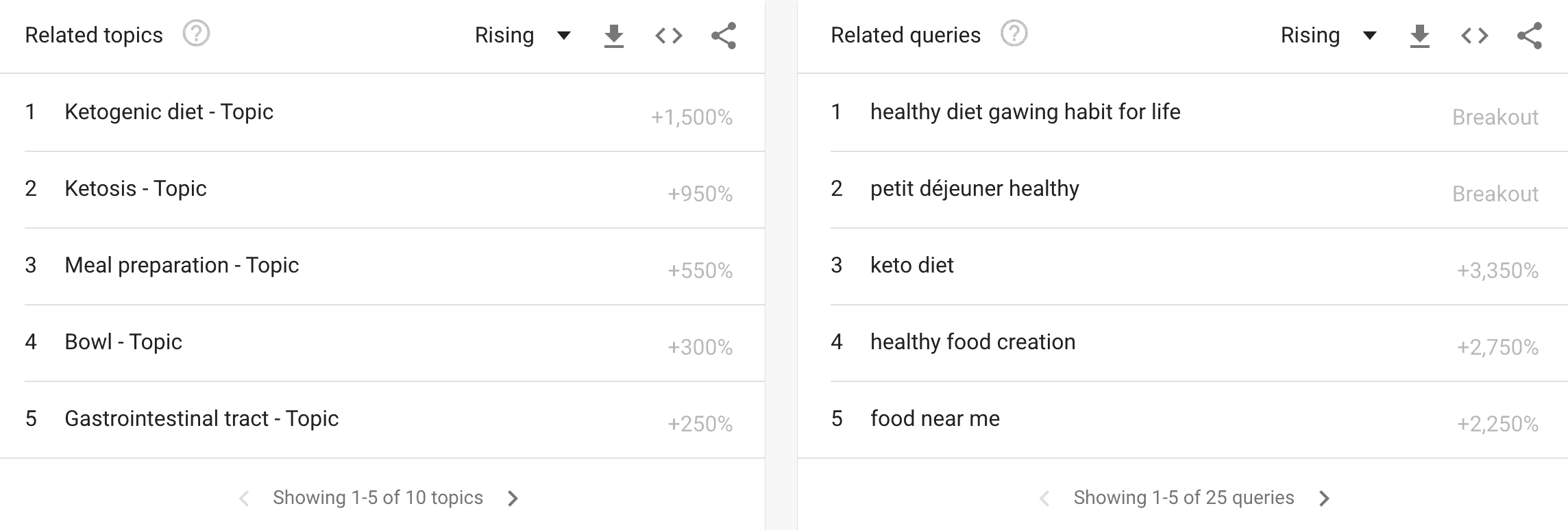
Click on any of them to see its own trend line.
You can also compare a few terms from your Google suggestions and keep the one with more interest.
In this case, ‘healthy eating for kids’ looks like a good choice. And you can repeat the whole process for sub-niches in any other industry.
One more thing. Trends that are just starting to grow have the most potential, because a market that’s only now appearing has almost no competition yet. So don’t drop an idea only because the numbers look small. If interest climbs fast and then levels off, it’s probably worth a closer look.
Section 4.
Health and wellness niche competition.
In this section, you will learn how competitive is this niche and opportunities.

Wherever there’s demand, there’s competition, and in the broad health niche it’s harsh. Big publishers own the competitive terms, and a small site like yours or mine simply doesn’t have their budget.
There’s a second reason it’s hard. Health is what Google calls a YMYL topic (Your Money or Your Life). Google’s own guidelines say its systems give even more weight to E-E-A-T, and above all to trust, on topics that could affect people’s health. In other words, a site giving medical advice with no credentials behind it will struggle to rank, however good the SEO is.
That’s why sub-niches and micro-niches are a much better option. The more you niche down, the less competition you face. Go too narrow, though, and you hit a different problem: the market might be too small.
The only way to know is to analyze keywords directly related to your sub-niche or micro-niche ideas. That tells you whether the main keywords you want are too competitive or there’s still room with easier terms.
By the way, don’t judge a niche by searches for the niche name itself. According to Google Ads data for the US (October 2026), “health niche” gets about 30 searches a month, “health and fitness niche” around 40 and “wellness niche” around 20. Those are people like you, looking for a niche. Your future readers search for their problems instead: a meal plan, a home gym, a yoga routine.
To do keyword research, you need an SEO tool. For this example, I’ll use SE Ranking.
Let’s take one of the keywords from the trends step: “healthy snacks for kids.”
First, to get a feel for the overall competition, look up that exact term in the tool.
As you can see, it’s a competitive keyword with a good search volume. With a new website, you’ll struggle to rank for it.
So what does that tell you? That this niche is closed to you? Not necessarily.
Checking the exact niche keyword tells you quickly how competitive a term is and how big the audience is. But you still need to look at your niche competitors to understand who you’re up against and which keywords you should target.
Here’s how:
Step #1. Search for your niche keyword:
Step #2. Scroll down to ‘keyword ideas.’ The similar keywords report gives you closer matches, and the related keywords report gives you terms around the same topic. Click ‘View Detailed Report‘ on either one. I usually go for “related” because it brings more options:
Step #3. Click ‘filter‘ at the top:
Step #4. Set the values you want. I chose a difficulty under 40, so I only see easier terms to get started with. Then click ‘Apply filters.’ The point is just to confirm that there are enough keywords to start a site in this niche.
Step #5. After filtering, you get a new list. In this case, 1669 keywords sorted by search volume. You can sort them by difficulty too.
So yes, you could still build a niche website around ‘healthy snacks for kids’ and rank for the less competitive terms.
You can use the same method in any niche to find easier keywords and sub-niches with fewer competitors.
A quick word on links, since plenty of people land on this page searching for “health niche edits.” A niche edit is a link inserted into an article that’s already published, and in the health niche you’ll find lots of vendors selling them as editorial backlinks. Google’s spam policies list “exchanging money for links, or posts that contain links” as link spam. If you buy them anyway, at least check that the site gets real traffic and is actually about health. A link from an unrelated site with no visitors won’t do much for you.
Resources:
Section 5.
How to make money with the health and wellness niche.
In this section, you will learn different ways to monetise this niche.

There are several ways to monetize a health niche website.
What works best depends on user intent. If your blog is about home workouts, for example, a subscription with videos is probably the best fit.
Solve your audience’s problem in the format they prefer. And most online businesses end up using more than one monetization method.
These are the main ways to make money in health and wellness:
A lot of people turn to professionals for healthy routines and advice.
Some services you could offer:
- An online course.
- Online training or coaching.
You could teach nutrition or sell personal training programs, either live over Zoom or as individual plans you send by email.
Or record a series of videos and package them as an online course.
Some websites doing this:
- Wellpreneur: Health & Wellness Coach Training Programs.
- Ama la Vida: Health Coaching.
- Wildfit: Nutritional online course
Resources:
Products are one of the easiest ways to monetize a website.
Some products you could create:
- Niche-specific products that solve your audience’s problems. An ecommerce store works very well for this.
- Ebooks with exercise routines, nutrition tips or vegan recipes.
- Videos or podcasts on specific topics that you sell one by one.
Put the right product in front of the right audience and it’s often the fastest way to your first sales. Combine it with an evergreen sales funnel and it keeps selling while you work on other things.
If you go the ecommerce route and don’t want to hold stock, a dropshipping platform like Sellvia (I used it myself) lets you start selling without dealing with suppliers yourself.
Some websites doing this:
- No Meat Athlete: Health and fitness meal recipes ebook.
- Kayla Itsines: For various workout and nutrition ebooks.
- Fit Plan: App with workout training.
Resources:
Subscriptions and memberships work really well in this niche.
The idea is to give subscribers something extra: access to a premium section, content that only they get, that kind of thing.
Memberships also bring recurring income. The catch? You have to keep delivering, whether that’s a new training program every week, a video series or anything else your members care about.
Exclusive videos or podcast episodes for subscribers work too.
Some websites doing this:
- Sweat 4 health: Training membership.
- My Fitness Pal: Subscription-based recipes and meal plans.
- WellnessMama: Podcast subscription.
Ads used to be the default way to monetize a website. They have three downsides, though:
- You need a lot of traffic to make decent money.
- They make the user experience worse.
- Plenty of readers block them.
Even so, many sites live off ads. You can start with Google AdSense (I used it myself) or networks like Media.net and VigLink (now Sovrn //Commerce).
My advice: treat ads as extra income, not your main source.
Some websites doing this:
This is my favorite way to make money online in any niche. It’s how chefgadgetgenius.com, my kitchen gadgets site, makes money, through Amazon’s affiliate program.
Affiliate marketing takes time to get traction, but once it does, the income keeps coming in with much less work.
Sign up for the best affiliate programs in your niche. Then read how to make money with affiliate marketing, and you’re ready to monetize your site this way.
Some websites doing this:
Resources:
Section 6.
Health and wellness sub-niches and micro-niches ideas.
In this section, I will provide you with some profitable niche ideas.

Using the method from this report, plus some extra research, I put together a list of health niches, from sub-niches to micro-niches, that can support a good online business. Some, like the weight loss niche, are big enough for a whole site on their own:
Sub-Niche: Healthy Food.
Micro-niche ideas:
- Healthy food for weight loss.
- Healthy food for kids
- Healthy food for dinner.
Recommended monetization methods:
Sub-Niche: Home Gym.
Micro-niche ideas:
- home gym ideas
- home gym equipment
- home gym exercise
Recommended monetization methods:
Sub-Niche: Weight loss.
Micro-niche ideas:
- Weight loss supplements
- Weight loss meal plan
- Weight loss for men
Recommended monetization methods:
Sub-Niche: Yoga.
Micro-niche ideas:
- Yoga for weight loss
- Yoga accessories
- Yoga for men
Recommended monetization methods:
Sub-Niche: CBD.
Micro-niche ideas:
- CBD for anxiety
- CBD oil for dogs
- CBD for sleep
Recommended monetization methods:
Want More? 50 Best Wellness and Health niche ideas for less competition
- Holistic Nutrition for Athletes
- Yoga for Chronic Pain Management
- Meditation for Stress Reduction
- Herbal Remedies for Digestive Health
- Aromatherapy for Sleep Enhancement
- Ayurvedic Skin Care Routines
- Postpartum Fitness Programs
- Mindfulness Techniques for Anxiety
- Gluten-Free Diet Planning
- Acupuncture for Migraine Relief
- Low-Impact Exercises for Seniors
- Plant-Based Diets for Heart Health
- Eco-Friendly Personal Care Products
- Natural Supplements for Joint Health
- Breathing Exercises for Lung Health
- Detox and Cleanse Programs
- Prenatal Yoga and Fitness
- Organic Gardening for Wellness
- Stress Management for Busy Professionals
- Holistic Pet Health and Nutrition
- Tai Chi for Balance and Coordination
- Chiropractic Care for Back Pain
- Vegan Nutrition for Athletes
- Mindful Eating Practices
- Reiki Healing Techniques
- Health Coaching for Diabetes Management
- Indoor Plant Therapy
- Sound Healing for Emotional Well-being
- Essential Oils for Allergy Relief
- Keto Diet for Weight Loss
- Functional Fitness Training
- Hormone Balance Through Diet
- Homeopathic Remedies for Common Ailments
- Naturopathic Treatments for Skin Conditions
- Mental Health Support for Teens
- Bikram Yoga for Detoxification
- Aquatic Therapy for Rehabilitation
- Strength Training for Women Over 50
- Raw Food Lifestyle Coaching
- Guided Visualization for Personal Growth
- Cycling for Cardiovascular Health
- Vegetarian Meal Planning for Families
- Sustainable Living for Health
- Anti-Inflammatory Diet Strategies
- Foot Reflexology for Relaxation
- Fitness Programs for New Mothers
- Qi Gong for Energy Balance
- Somatic Therapy for Trauma Recovery
- Personalized Herbal Teas for Wellness
- Biohacking Techniques for Optimal Health
Now it’s your turn!
did you already find your health and wellness niche?
Health and wellness can be a very profitable niche, but the competition is brutal. If you want in, niche down.
Who should skip it? If you can’t back your content with real expertise, your own or a qualified writer’s, I’d pick another niche. Google is strict with health content, and so are readers.
A micro-niche means fewer potential customers, but at least they’ll be able to find you. You’ll also build authority faster and start making money sooner.
My suggestion: pick one sub-niche from the list above, run it through Google Trends and your keyword tool this week, and only then buy a domain. Got a question? Leave a comment below.



Related: