Drop Servicing Guide: 10 Best Niches + How To get Started
In this guide, you will learn:
What is drop servicing?
How does it work
How to start a drop servicing business
And more!


Section 1
Introduction to Drop Servicing

Section 2
What is Drop Servicing

Section 3
How Does Drop Servicing Work?

Section 7
Drop Servicing Niche Ideas

Section 8
Drop Shipping Vs. Drop Servicing
Section 1.
Introduction to Drop Servicing
In this section, I will give you a brief introduction to drop servicing.
Drop servicing is a way to sell services online without doing the work yourself. A client pays you, you hire a freelancer or an agency to deliver it for less, and you keep the difference. Some people call it a drop service business, others write it as dropservicing, all in one word. It’s the same thing.
Sounds easy, right? The idea is. Running a drop servicing business well is another story, because you’re still responsible for every order your freelancer delivers late or badly.
What makes drop servicing attractive is the entry cost. You don’t need inventory, a big budget or a specific skill to start, and you can run it from anywhere with a laptop. What it does ask for is your time: finding clients and keeping the freelancers who serve them.
How much interest is there? I used DataForSEO to pull Google Ads data for the US in October 2026: “drop servicing” gets about 720 searches a month and advertisers pay around $26 per click for it. That second number tells you plenty of people are selling courses and coaching around this model. Before you pay for any of them, read this guide. It covers the basics they all start with.
By the end of this drop servicing guide, you’ll know:
- What is drop servicing, in plain words
- How it compares with other online businesses, dropshipping included
- How to start a drop servicing business step by step
- Where to find clients, and which niches are worth your time
Ready? Let’s start with the definition.
Section 2.
What is Drop Servicing?
In this section, you will learn the drop servicing definition.
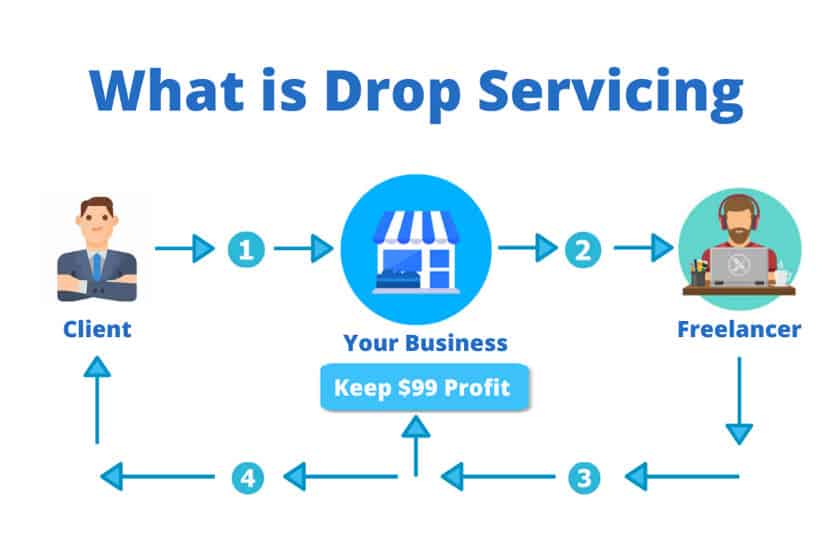
Drop servicing is an online business model where you sell a service to a client and hire a freelancer or agency to deliver it.
Here’s a simple example. A client pays you $50 for a blog post. You hire a writer who charges $30 for it. You send the finished post to the client and keep $20. That’s drop servicing.
In real life the margin is thinner. If you hire on Fiverr, the platform adds a 5.5% service fee on top of the gig price (plus an extra fee on small orders), and Upwork’s Basic plan adds 5% to what you pay freelancers. I checked both help centers in October 2026. On a $30 order that’s a couple of dollars gone before you’ve paid for ads, tools or your own time.
You’ll also hear it called service arbitrage. You don’t create the service yourself. You sit in the middle, between the person who needs it and the person who does it, and the price gap is your profit. Do you have to tell clients you outsource? Plenty of agencies work like this without advertising it. What you can’t do is lie about who does the work if they ask, or promise things your freelancer can’t deliver.
Section 3.
How Does Drop Servicing Business Model Work?
Learn the basics of drop servicing business model.
Think of a building contractor. They win the job, then hire architects, electricians and plumbers for the parts they can’t do themselves. Drop servicing works the same way, only online.
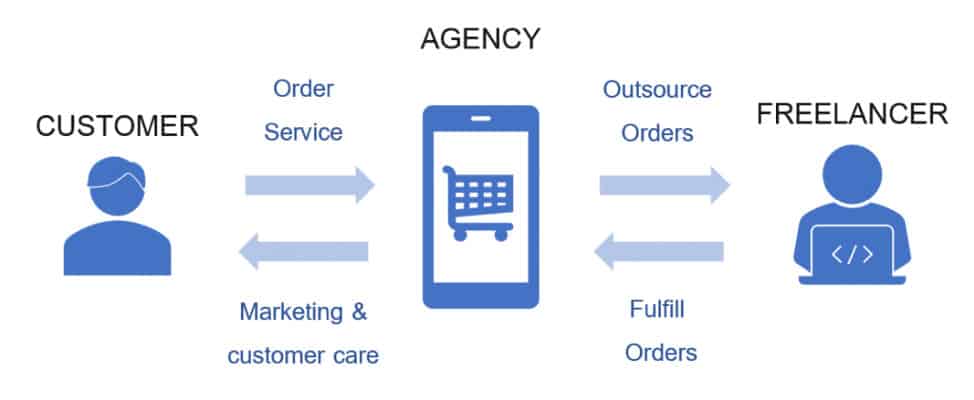
You find the client, close the deal and then place the order with a freelancer who knows how to do that job. That’s the core of any drop servicing business.
Here’s how the drop servicing business model works, step by step:
- You set up a website or a marketplace profile offering a service that businesses already pay for.
- You promote that service and show clients why they should trust you with it.
- A client orders. You agree on the price, the brief and the deadline, and you take the payment.
- You pick a freelancer or agency who can do the job at a price that still leaves you a margin.
- The freelancer delivers, you check the work and you hand it over to the client.
Simple on paper. The hard part is the two relationships in the middle: clients who keep ordering and freelancers who keep delivering. Lose either one and your drop servicing business stops.
Section 4.
What Do You Need to Get Started with Drop Servicing?
In this section, you will learn what you need to start a drop servicing business.

Decided to give drop servicing a go? Before you build your drop servicing business, make sure you have these four things.
- A niche comes first. Pick one service you understand well enough to judge the quality of the work. When you’re starting out, one service is plenty.
- A website, or at least a clear profile. Your homepage has to say what you sell and to whom at a glance. Search for drop service websites and you’ll find hundreds of them selling the same logos and articles, so what does yours add? Faster delivery or a narrower niche are good answers. That answer is what makes a one-person drop servicing website look like a real drop servicing agency.
- An offer that makes sense. Tell the client why you’re the safer choice, with samples, reviews and a clear promise about what they get and when. Without proof, your drop servicing offer looks like any other cheap gig.
- A freelancer you can rely on. Fiverr, Upwork and Freelancer.com are where most people start, and they’re the drop service websites where you’ll find most of your suppliers. Order a small test job before you sell anything that depends on them.
Section 5.
How to Start Drop Servicing?
In this section, you will learn what you need to do to create a drop servicing business.

Still reading? Then you’re serious about this.
A lot of people like the idea of drop servicing and never get past the first step, because nobody tells them in which order to do things. That’s what this section is for.
Here’s how to start drop servicing, in the order I’d do it.
Step #1: Do a thorough market search for drop servicing business niche/ideas.

First, find out what people actually pay for. A drop servicing business built on a service nobody buys is dead before it starts.
Write down the skills you understand, then check freelance job boards and Google Trends to see which services are in demand. I’d also look at what each service costs per click in Google Ads. In the US, “seo services” costs advertisers about $48 a click and “web development services” about $50, while “social media management services” is closer to $15 (Google Ads data, October 2026). When businesses pay that much to find a provider, there’s usually room for your margin.
Then do the drop servicing math: what a client would pay you, minus what a good freelancer charges, minus the platform fees.
If you’ve never done this before, start with my post on niche research.
Note: don’t try five drop servicing niches at once. Pick one, learn how it works and add more once you get the hang of it.
Step #2: Build your team of freelancers and agencies.

Your drop servicing business is only as good as the freelancer doing the work. You need people who know the job, hit their deadlines and charge little enough to leave you a margin.
Already know a good service provider for your drop servicing offer? Start there. If not, the internet has plenty.
These are the places I’d look for freelancers and agencies:
- Facebook and LinkedIn groups for freelancers.
- Freelance marketplaces like Fiverr, Upwork and PeoplePerHour.
- Job boards for one specific skill, like ProBlogger for writers.
- White label agencies that already sell the service to resellers.
Pay attention to how they communicate, how careful they are with details and whether their samples are really theirs.
Once you find good people, treat them well. In drop servicing, a freelancer who likes working with you will give you priority when a client is in a hurry.
Agree on how you’ll pay them (per hour, per word or per project), and check what others charge for the same work so you know where you stand when you negotiate.
If you want to manage your freelancers in one place, take a look at Fiverr Business.
Freelancer or White label agencies for outsourcing?
Freelancer or white label agency? Anyone starting with drop servicing asks this, and both options have a catch.
White label agencies sell their services to middlemen like you, so they’re used to working this way. They’re usually more reliable than a single freelancer, which means less risk for you.
The catch is price. Agencies charge more, so your margin shrinks.
A good freelancer gives you a better margin and, often, better quality. Finding one takes time.
And freelancers can disappear halfway through a job. Whichever you choose, have a backup.
Step #3: Make an optimized profile or website and keep it updated.

With your niche and your providers ready, build your drop servicing website or profile. Keep it simple, make sure it works on mobile and that visitors find the services page in one click.
Say clearly what you offer and how clients can contact you. Skip the vague agency talk. A client should understand what you do in a few seconds.
Keep adding reviews and samples as you get them. That’s what makes new drop servicing clients trust you.
Learn how to create a niche website from scratch.
Step #4: Define your services and approximate your rates.

List the exact services you sell. Once you have a niche, this part is easy. If your niche is content writing, for example, you might offer travel articles or technical content.
Then set your drop servicing rates. Too low and you can’t pay the freelancer, let alone yourself. Too high and clients leave before they read your offer. Start from what the freelancer charges, add the platform fees, and only then add your margin.
Step #5: Search for clients and build networks.

No clients, no drop servicing business. Start by defining who buys your service, because that tells you where to look for them.
Many people will tell you building a website is the best way to find clients. It helps, since a website makes you look legit. But the relationship matters more. If a client is happy, you’re the first one they’ll think of next time.
Before you start pitching, settle your prices so they cover you and the freelancer without asking too much from clients.
And be ready to explain why your drop servicing price is what it is.
Step #6: Direct and train your team.

As your drop servicing business grows, you’ll need to manage the people working for you.
Write down how you want things done and brief your freelancers properly on what each client expects.
Fiverr Business is one option to keep your team organized in one place.
Step #7: Use convenient and flexible payment tools and methods.
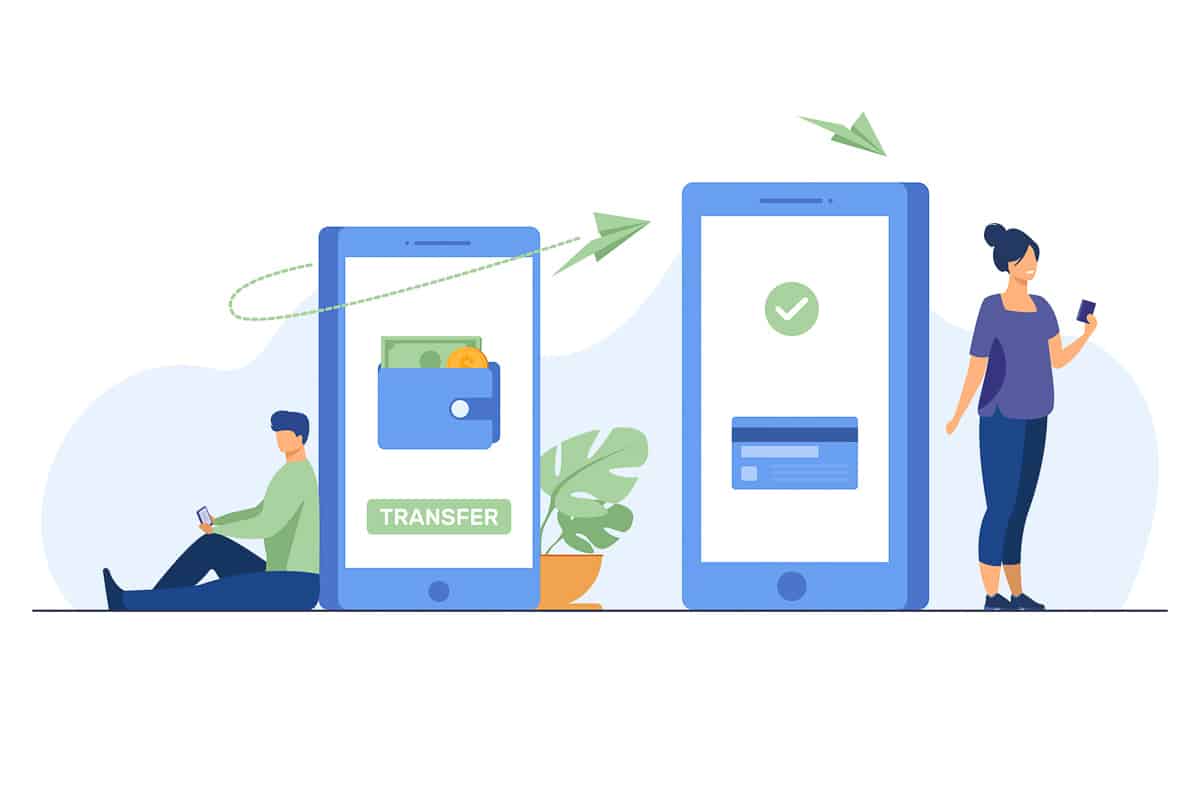
Payments look like a small detail in drop servicing, yet they confuse a lot of beginners.
You may have clients and freelancers in different countries, so you need payment tools that work for all of them.
For local payments, a bank transfer is usually fine. For international ones, PayPal is the common choice. And if you hire through a marketplace, payments are already built in, so that part is solved.
Choose whatever works for both sides.
One option worth a look is Payoneer. If you sell internationally through marketplaces like Amazon or platforms like Shopify, Payoneer can get you better exchange rates when you bring your sales home, and it lets you pay suppliers in their own currency.
Step #8: Market/advertise your services.

Start marketing your drop servicing business from day one.
Every person you reach could become a client, or even a freelancer you hire later.
Facebook groups, LinkedIn and forums in your niche are free places to start.
The rule for promoting drop servicing: be persistent and professional, never desperate or pushy.
You’ll find more ideas on how to promote yourself in my niche marketing hub.
Step #9: Offer credible services, customer support, and reliability as much as you can.

Happy clients come back, and repeat orders are where drop servicing makes its money. Answer their messages quickly, clear up their doubts, give realistic deadlines and deliver what you promised.
It doesn’t look like much at first, but over time this is what builds a drop servicing business that lasts.
One tool I’d consider here is Customerly. It keeps your conversations with clients in one place. You’d be surprised how many potential clients you can lose just because nobody answered a simple question. With Customerly, you remove that risk.
That’s how to start drop servicing even if you don’t have previous experience. Were you looking for a drop servicing PDF or a drop servicing course? Most of them walk through these same nine steps. I’d skip paid courses until you’ve tried to sell one service on your own, because that first order teaches you more than any module.
Section 6.
How to Get Clients for Drop Servicing?
In this section, you will learn some methods to catch your first clients.

Your drop servicing business lives or dies on your ability to find clients.
It’s also the part of drop servicing that wears beginners out the most.
Do you need your own website to get drop servicing clients? No. A lot of people believe that, and it stops them from starting.
LinkedIn, Upwork, Fiverr, forums and Facebook groups all work, and you can open a profile on any of them today.

If you have a budget, paid advertising on social media is another way to get clients for drop servicing.
Here are the steps to land your first drop servicing clients.
Step#1. Optimize your profile and define your services.
Create profiles on marketplaces like Fiverr and on LinkedIn, and review them every few weeks. Keep them short: a quick summary of what you do and for whom.
If you have a website, keep the pages simple. Wherever clients find you, make sure you:
- Respect their time and give them complete information, fast.
- Add contact details (email, phone or anything else) that you actually check.
- Show credentials and reviews if you have them.
- Describe each service (content writing, data entry, video editing, web design) briefly and clearly.
Step #2. Demonstrate authority and credibility.
Once your profile is ready, you need to show clients that your drop servicing business knows what it’s doing.
Be flexible with clients, but stay in charge of how the service is delivered. That’s what makes you look serious.
Add links to previous work and reviews from past clients. No reviews yet? Use samples from your freelancers, with their permission, to show the quality you can deliver.
Step #3. Advertise on several platforms.
One of the oldest tricks still works: give away some free advice to the businesses you want as clients.
If you have money for ads, run them for your drop servicing offer too.
If not, join the Facebook and LinkedIn groups where your clients spend time and offer your services there.
Ask your freelancers for good samples and use them in your ads and posts.
And make sure your profile can close the deal. When an ad works and someone lands on your page, that visit should turn into a conversation.
Step #4. Be professional and less pushy.
Every business needs professionalism, and a drop servicing business more than most.
Put yourself in the client’s shoes. Why would they trust someone they just met?
Don’t push them to buy or expect them to believe you straight away. Let your samples and your service do the talking.
Push too hard and they’ll close the door on you.
Keep it professional: no slang, no swearing and nothing too personal.
Respect business owners’ time. LinkedIn and email work better for a first contact than a random message on a personal account.
Step #5. Call to Action.
Without a call to action, you might not land a single client for your drop servicing business, even with a great profile and good ads.
Spell out the next step: how they contact you, when you’re available and what happens after they get in touch.
No clever wording needed. Tell them how to reach you and how you’ll help, and more of them will take that step.
Section 7.
Drop Servicing Niche Ideas
In this section, I’ll provide you with a list of the best drop servicing niches.
Like any business, drop servicing has niches. To improve your chances, pick evergreen services that businesses buy year after year.
Since you’re outsourcing, the trick is to find drop services that are in high demand and easy to check for quality.
Here’s my list of the best drop servicing niches to consider:
- Infographic designs.
- Search engine optimization (SEO) services.
- Graphic design services.
- Coding (Programming).
- Content creators.
- Social media management.
- Video creation and animation.
- Ads creation.
- Voice over services.
- Ecommerce website.
- WordPress fixer.
If you want to know more about each of these niches and how much you could make with them, check the 10+ best drop servicing niches.
Which one would I pick? I run a local SEO agency, so I’m biased toward SEO. The numbers support it, though: “seo services” gets around 60,500 searches a month in the US with a CPC near $48, and even “white label seo” (the agencies you’d outsource to) gets about 720. The catch is that SEO takes months to show results, and if your freelancer does a bad job, your client’s rankings pay for it. If you can’t judge SEO work yourself, start with something easier to check, like graphic design or video editing.
Section 8.
Drop Shipping Vs. Drop Servicing- Which is Better?
Learn which one is the best for you.
Now that you know how drop servicing works, how does it compare with dropshipping?
Dropshipping is the same middleman idea applied to physical products. You sell items online and a supplier ships them to the customer, so you never hold inventory. I used Sellvia for the dropshipping side of things. On drop servicing I’m giving you my opinion, not my own results.
Both models have pros and cons. Here’s how drop servicing and dropshipping compare on the points that matter most.
Start-up costs.
Both need less money upfront than most businesses.
Drop servicing usually needs even less, because there are no products to buy or store.
Shipping period/ Delivery periods.
Here, drop servicing wins.
Physical orders can take a long time to reach the customer, and every delay is your problem.
With drop servicing you deliver files or work online, which is usually faster and easier to adjust.
Flexibility.
Drop servicing gives you more freedom to decide how much you work and when.
In dropshipping you have to watch orders and deliveries, and replace products when they go out of stock.
In drop servicing, once you have a freelancer you trust, you can accept a job and get it started the same day.
Returns and refunds.
Returns and refunds are one of the biggest headaches in dropshipping. They cost money and they can hurt your reputation.
Drop servicing has reputation risks too. But since you deliver a service and not a physical product, a bad order is usually easier to fix: you ask for a revision instead of handling a return.
Competition.
Dropshipping is far more crowded. In the US, “dropshipping” gets about 165,000 Google searches a month against roughly 720 for “drop servicing” (Google Ads data, October 2026). More interest also means a lot more people selling the same products.
Customer Support.
Dropshipping needs solid customer support to work, with tracking questions, delays and returns every week. Drop servicing needs less of it, although you still have to answer clients quickly.
Scalability, Risk, and Profitability.
Both can scale. In the long run, though, dropshipping asks for more time and patience than a drop servicing business.
As a dropshipping store grows, it needs more resources, and shipping brings its own problems. That makes it riskier than drop servicing.
Put in the time and both dropshipping and drop servicing can be profitable.
Responsibility.
In both models, the buck stops with you. If your drop servicing freelancer misses a deadline, the client blames you, not them.
Final Verdict.
Dropshipping takes more work to run day to day, so for most beginners I’d pick drop servicing. Who shouldn’t? Anyone who can’t judge the quality of the service they sell, or who hates dealing with clients. You’d end up stuck between unhappy clients and freelancers you can’t evaluate.
You might want to read next:
Now it’s your turn!
Are you ready to start your drop servicing business?
Drop servicing can work if you choose one service, find a freelancer you trust and treat your clients well. Get that right and you can become an entrepreneur with your own online business.
Don’t expect it overnight, though. Landing the first drop servicing clients can take months. My advice: pick one niche from the list above this week, order the same test job from two freelancers and compare the results before you sell anything.
Now I’d like to turn it over to you:
Did you find this content useful to start your drop servicing business?
If you have any questions, leave a comment below.


RELATED CONTENT

Niche Selection Guide: Why Pest Control Could Be Your Next Profitable Venture
Choosing the right niche makes a huge difference in attaining long-term success. While some niches…

100 Best TikTok Niches Ideas to go viral in 2026
The best TikTok niches right now are dance, food, comedy, drawing, fitness, memes, fashion, travel,…

50 Best Youtube Niches With Low Competition to Skyrocket Your Channel
Are you looking for the best YouTube niches with low competition to start a profitable…

10 Trending Niches on YouTube: Popular Content Ideas
YouTube offers endless opportunities to create content and reach a vast audience. With so many…

10 Best DIY Niches to Launch Your Niche Website
Finding a DIY niche for your website can be both exciting and profitable. If you…

Personal Development Niche Report: 50+ Niche Ideas, Trends & Tips
Personal Development Report: 50+ Niche Ideas, Trends & Tips In this report, you will learn:…