“Topical authority” is one of those SEO terms that gets thrown around a lot and explained very little. Some people treat it as a secret Google score you can pump up by publishing 200 articles. Others say it doesn’t exist at all.
The truth sits somewhere in the middle, and it matters a lot if you run a niche site. In this guide I’ll explain what topical authority actually is, what Google has (and hasn’t) said about it, and the process I use to build it on a small site without falling into the “publish everything” trap.
What is topical authority?
Topical authority is the idea that search engines trust a website more on a subject when that site covers the subject deeply, consistently and better than most alternatives, instead of publishing one-off pages on random topics.
A simple way to picture it: if you had a question about aquarium filters, would you trust a general lifestyle blog with one post on the subject, or a site where every page is about keeping fish? Most people would pick the second one. Topical authority is the search-engine version of that instinct.
Two things are worth being clear about from the start:
- It is not a single number you can look up. Tools like Semrush or Ahrefs have their own scores, but those are third-party estimates, not something Google publishes.
- It is built at the site level, but earned page by page. Every page that is thin, off-topic or a near-copy of another page dilutes the picture you are trying to build.
What Google has actually said about it
A lot of topical authority advice is folklore, so it helps to separate what is documented from what is inferred.
1. Google has a “topic authority” system (for news)
In May 2023 Google published Understanding news topic authority on its Search Central blog. It describes a system that helps Google work out which publications have expertise in specific areas such as health, politics or finance. Signals it mentions include how notable a source is for a topic or location, how often its original reporting is cited by other publishers, and its history of high-quality coverage.
Google’s Danny Sullivan also clarified that this was not a brand-new launch; the system had been in use for years. The key limitation: the post is about news queries. Google has not said the same system ranks blogs and affiliate sites.
2. Google asks whether your site has a clear focus
Google’s guide to creating helpful, reliable, people-first content includes a question that is very close to the topical authority idea: does your site have a primary purpose or focus? The same guide warns against producing lots of content on many different topics in the hope that some of it performs.
3. The 2024 documentation leak pointed in the same direction
In May 2024, internal Google API documentation was made public and analysed by Rand Fishkin and Mike King, among others. Search Engine Land’s coverage and later analyses highlighted attributes called siteFocusScore (how focused a site is on one topic) and siteRadius (how far a page drifts from the site’s main topic). The documents list attributes, not how much each one weighs, so treat this as a strong hint rather than a recipe.
Put together, the honest summary is: Google clearly cares whether a site is focused and expert on its subject. Nobody outside Google knows the exact mechanics. That is fine, because the practical steps are the same either way.
Why it matters even more for niche sites
A big publisher can rank on authority built over decades. A niche site usually can’t. What a small site can do is be the most useful place on the web for a narrow subject.
This is also where many niche sites go wrong. On this site I publish niche reports, and I learned the hard way that covering many niches with the same structure is not the same as being an authority on any of them. When several pages share the same skeleton and only the niche name changes, they add pages without adding expertise. That kind of “coverage” is exactly what Google’s helpful content guidance warns about.
So the goal is not “more pages on the topic”. It is more useful, connected pages on a topic you can genuinely speak about.
How to build topical authority, step by step
Step 1: Define your topic and its borders
Write one sentence that describes what your site is about and who it is for. For example: “Practical guides for people starting their first saltwater aquarium.” Then write what is out of scope. Freshwater tanks? Pond fish? Pet insurance?
This sounds basic, but the borders are what stop you from drifting into high-volume, off-topic keywords later. If you are unsure how narrow to go, my micro niche blogging guide and the comparison of single-niche vs multi-niche blogs will help.
Step 2: Map the subtopics before you write
Before writing article number one, list the questions a beginner, an intermediate and an advanced reader would ask about your topic. Good sources:
- The “People also ask” boxes and related searches in Google
- Subreddits and forums where your audience asks questions in their own words
- Related-keyword reports from an SEO tool (my niche keyword research guide walks through this)
- The headings of the pages that already rank, to see what they cover and what they skip
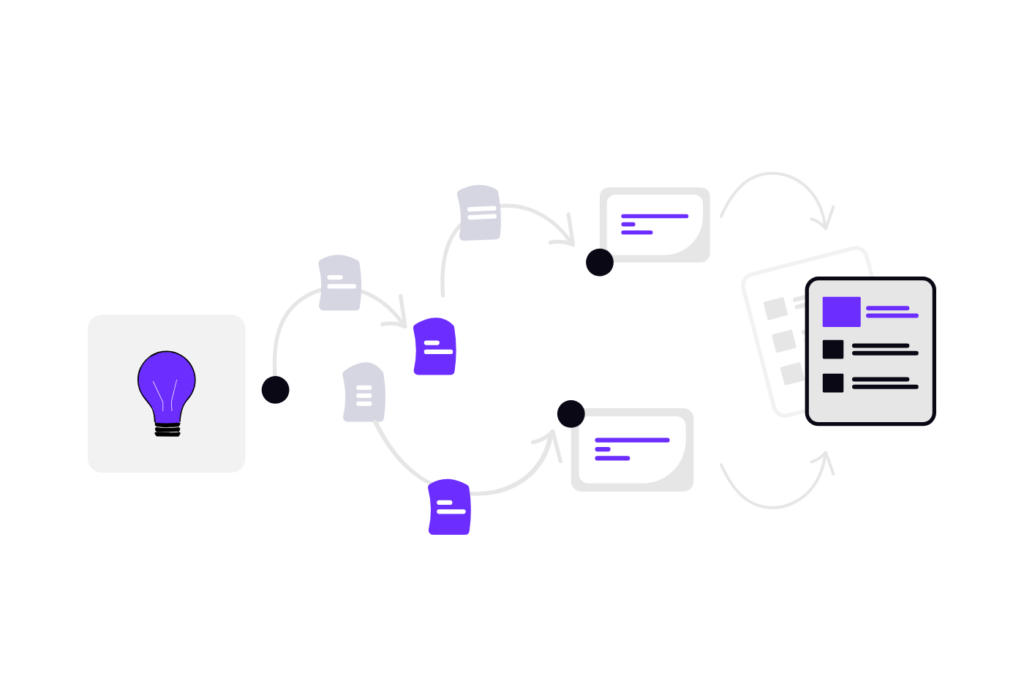
Group those questions into clusters. Each cluster becomes one hub page (the broad guide) plus several supporting pages (one specific question each). A saltwater aquarium site might have clusters for equipment, water chemistry, fish selection and common problems.
Step 3: One page per search intent
This is the rule that saves the most trouble later. If two keywords would be answered by the same page, they belong on the same page. “Best protein skimmer” and “top protein skimmers” are one article, not two. Publishing both creates pages that compete with each other instead of supporting each other. If that has already happened on your site, my guide to keyword cannibalization shows how to find and fix it.
Step 4: Build the hub first, then fill the cluster
Publish the hub page early, even if it is shorter at first, and then publish the supporting articles around it. Each supporting article links up to the hub, and the hub links down to each supporting article as it goes live. Here on The Niche Guru, the niche blogging hub and the niche research hub work exactly this way.
Finishing one cluster before starting the next also makes a difference. Ten connected articles on water chemistry tell a clearer story than ten articles spread across ten different subjects.
Step 5: Link like a helpful guide, not like a robot
Internal links should exist where a reader would genuinely want to click next. A few rules I follow:
- Every supporting page links to its hub in the first part of the article.
- Sibling pages link to each other when one answers a follow-up question of the other.
- Anchor text describes the destination (“how to cycle a new tank”), not “click here”.
- No blocks of 20 related links at the bottom that nobody reads.
Step 6: Add what only you can add
Depth is not word count. It is the detail that proves you have done the thing: your own photos, the mistake you made the first time, a price you actually paid, a test you ran, a comparison table built from real specs. This is also what separates your page from the ten others that summarise the same top results. My guide on growing a niche blog has more ideas for this.
Step 7: Prune and merge what doesn’t fit
Authority is also about what you remove. Once or twice a year, review every page:
- Off-topic pages that attract no relevant traffic: consider removing them or moving them elsewhere.
- Overlapping pages that target the same intent: merge them into the stronger one and redirect the other.
- Outdated pages: update the facts, screenshots and dates only when you have actually changed something.
How to tell whether it’s working
There is no “topical authority” report, but you can watch for the effects in Google Search Console:
- Impressions per cluster. Filter the Pages report by the folder or URL pattern of a cluster and compare impressions every month. Growing clusters show up here first.
- Number of ranking queries. A cluster that is gaining authority starts ranking for queries you never targeted directly.
- New pages ranking faster. When a site is trusted on a subject, a new supporting article in that cluster tends to get impressions sooner than one on an unrelated topic.
- Fewer URLs per query. If Google keeps swapping two of your URLs for the same search, you have overlap to fix.
Give it time. Clusters usually need several months of consistent publishing before the trend is clear, so measure in quarters, not weeks. My post on measuring niche blogging performance covers the metrics in more detail.

Common topical authority mistakes
- Chasing volume outside your topic. A high-volume keyword that doesn’t fit your site is a distraction, and it can blur what your site is about.
- Templated “coverage”. Twenty pages with the same structure and a different keyword swapped in look like coverage on a spreadsheet and like thin content to a reader.
- Publishing everything at once. A hundred rushed articles rarely beat twenty careful ones. Quality and consistency matter more than launch-day volume.
- Ignoring old content. Outdated pages on your core topic send a weak signal. Refreshing them is often a better use of time than writing something new.
- Affiliate links that don’t belong. Promoting products unrelated to the page (or the site) is one of the fastest ways to look like you are writing for search engines rather than readers.
FAQ
Is topical authority a Google ranking factor?
Not as a single, named factor for most sites. Google has documented a topic authority system for news, and its helpful content guidance values a clear site focus. For blogs and niche sites, think of topical authority as the result of many signals rather than one score.
How many articles do I need to build topical authority?
There is no fixed number. What matters is covering the important questions of your topic well. A narrow topic might need 30 strong articles; a broad one might need hundreds. Covering one cluster properly is more useful than a target number.
How long does it take?
For a new niche site, usually several months of consistent publishing before clusters start to gain impressions steadily. Established sites adding a new cluster can see movement sooner.
Can I build topical authority with AI-written content?
Google’s position is that it rewards helpful content however it is produced, and that producing lots of content mainly to rank breaks its spam policies on scaled content. Whatever tools you use, each page needs to add something real: experience, original data or a clearer answer than what already exists.
Do backlinks still matter if I have topical authority?
Yes. Links from relevant sites are still one of the ways search engines judge whether others trust you on a subject. Topical focus and good links reinforce each other.
Final thoughts
Topical authority is less of a trick and more of a discipline: pick a topic you can genuinely serve, map it before you write, publish in connected clusters, and keep pruning what doesn’t belong. It is slower than publishing everything at once, but it is the approach that survives algorithm updates.
If you are still choosing the topic itself, start with my step-by-step niche research guide or browse these blog niche ideas.