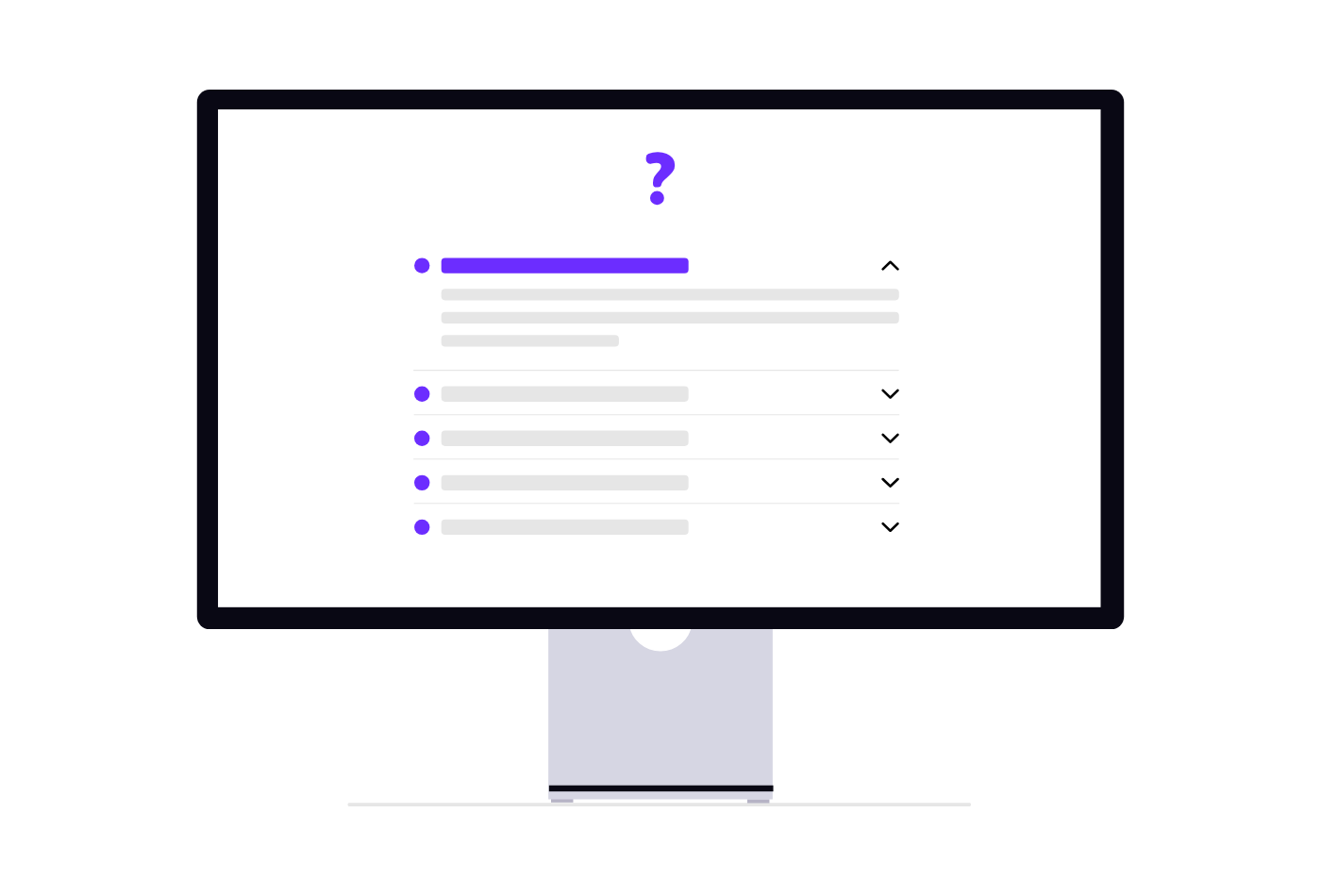
People Also Ask (PAA) is the box of related questions Google shows in its search results. Click a question and it opens with a short answer, and Google usually loads a few more questions underneath.
For years the trick with that box was simple: answer the question in one clean paragraph and Google might quote you, link included. I wanted to know if that still works for the topics I write about, so I measured it. I pulled the US desktop results for 30 keywords my own blog shows up for in Search Console, using the DataForSEO SERP API, on November 17, 2026. Every one of the 30 had a PAA box, and none of its 120 answers was a paragraph quoted from a single website.
I’ll show you the numbers, the actual questions, how they compare with my Search Console data, and how I’d use PAA for content research now.
What is People Also Ask in Google?
PAA is a SERP feature: a list of questions related to your search, collapsed by default. Each question works like a small search of its own. Open it and you get an answer; open a few and the list keeps growing.
For years the answer under each question was a snippet from one web page, with a link to it. That’s why SEOs chased PAA spots. It’s also why bloggers mine the box for ideas: it’s a free list of the follow-up questions Google associates with a topic, often phrased like the long-tail keywords small sites can actually win.
What 30 Google results showed me
The 30 keywords mix niche topics (“dropshipping niches”, “gaming niche”) and SEO topics (“anchor text”, “meta description length”). My blog already gets impressions for all of them, so these are results my readers actually see. Settings: United States, English, desktop, top 20 results. The raw data is from November 17, 2026, and Google’s results change constantly, so treat it as a snapshot.
| What I checked | Result |
|---|---|
| Search results pulled | 30 |
| With a People Also Ask box | 30 |
| With an AI Overview | 30 |
| Questions per box | 4 in every result |
| Total questions | 120 |
| Answers classified as AI Overview answers | 112 |
| Answers with nothing captured | 8 |
| Answers quoted from one website | 0 |
| Box was the 3rd block on the page | 20 of 30 |
| Lowest position of the box | 11th block |
Where the box sits on the page
The AI Overview came first in all 30 results. People Also Ask was never far behind. In 20 of the 30 it was the third block on the page, and in 16 of those it sat right after the AI Overview and the first organic result. In the other 4, a video or image block took that second slot.
Of the other 10, it was the 4th block in 5 results, the 5th in 2, and the 6th, 9th and 11th in one each. The lowest was “niche relevant backlinks”, at the 11th block.
What does that mean for you? If your page ranks second or lower, there’s a good chance a searcher sees four questions before they see you.
Who writes the answers now
This was the surprise. DataForSEO classified 112 of the 120 answers as AI Overview answers and flagged them as loaded asynchronously, so their text was not in the results it returned. For the other 8 questions it captured no answer at all.
None of the 120 came back as the classic format: one website’s paragraph with a link underneath.
The limit here is my method. I tried again on “anchor text” with DataForSEO’s option to load asynchronous AI Overviews switched on, and the PAA answers still came back without text or sources. So I can’t tell you whether those AI answers cite websites, or which ones. Only that in this sample, nobody “owned” a PAA answer the old way.
That matches what bigger datasets show. In mid-2025, Mark Williams-Cook of AlsoAsked reported that 12.6% of PAA answers were AI-generated, from a sample of over 8.4 million English results. By September 2026, Search Engine Watch reported AlsoAsked data putting that share at 97%. My 30 keywords on one day are a tiny sample next to those, but they point the same way.
What kind of questions show up
Most PAA questions are short and broad. Of the 120, 67 start with “What” (counting “What’s”), 19 with “How”, 11 with “Can”, 7 with “Is” and 6 with “Which”. Definitions and quick comparisons dominate.
Google also reuses generic questions across related searches. “What is the hottest niche right now?” appeared in 6 different results, from “build a niche website” to “micro niche”. “What’s the best niche?” appeared in 4. Several others showed up twice. The box tells you more about the topic cluster than about your exact keyword.
And some questions drift off topic completely:
- “anchor text” brought up “What is an anchor text in reading?”, which is about reading comprehension, not links.
- “gaming niche” brought up “Are 48% of gamers girls?”
- “twitter niches” brought up “How to allow 18+ content on Twitter?”
- Both “seo title” and “long tail keywords” brought up “What are the 3 C’s of SEO?”
Copy every question into your outline and a guide to links gets a section on reading class. Filter.
Here are 6 of the 30 keywords with the exact four questions Google showed:
| Keyword | Box position | The 4 questions |
|---|---|---|
| drop servicing | 3 | How do I start an online DropShipping business? Which is better, DropShipping or reselling? What is drop servicing? Is drop servicing legit? |
| build a niche website | 6 | Is $1500 a good price for a website? What is the hottest niche right now? How much does a website make per 1,000 views? What niche is most profitable? |
| gaming niche | 3 | What is trending in gaming right now? Are 48% of gamers girls? What is the 20/20/20 rule for gaming? What are the big 3 in gaming? |
| anchor text | 3 | What is meant by anchor text? What is a good anchor text? What is an anchor text in reading? How to write an anchor text? |
| search intent | 3 | How to analyze search intent? Can a beginner do SEO? Is SEO dead or evolving in 2026? What are the 16 types of SEO keywords? |
| meta description length | 4 | What is the recommended character limit for a meta description? Why are meta descriptions important? How many characters should a description be? Where does a meta description appear? |
Compare “meta description length” with “build a niche website”. The first box stays on topic; the second drifts into website prices and generic niche questions. The tighter the keyword, the more useful the box.
People Also Ask vs my own Search Console questions
PAA shows what Google thinks people ask. Search Console shows what people actually typed. I compared the two using my own data for August 19 to November 16, 2026 (90 days).
Out of 2,934 queries, 274 (9.3%) were shaped like a question, meaning they started with a question word like how or what, or with a verb like is or can. Those question queries got 3,648 of my 53,271 impressions, or 6.8%. Of the 77 clicks Search Console attributes to a specific query, zero came from a question.
The overlap with PAA was tiny. Only 2 of the 120 PAA questions exactly match a query in my Search Console: “What is drop servicing?” and “How to build a niche website?”
I’ll be honest about the second one. “how to build a niche website” is my biggest question query, with 365 impressions, but at an average position of 65.2. “how to create a niche website” sits at 67.9. That’s page 7. My site is weak on exactly the questions that matter most to it, and PAA didn’t warn me about that. Search Console did.
So PAA isn’t a mirror of your audience. It’s Google’s guess at the next question. You need both lists.
How I’d use People Also Ask for content research in 2026
Given what the data showed, this is the process I’d follow:
- Collect questions across many related searches, not one. One box gives you four questions. Thirty gave me 120, with repeats. Group them by topic the same way you’d do keyword clustering.
- Drop the off-topic and generic questions. Anything about a different meaning of your keyword goes, and so does anything that shows up for every niche keyword, like “What is the hottest niche right now?”
- Check the survivors against your own Search Console question queries. Filter your queries by question words and look for matches. A question that appears in both lists is a strong candidate.
- Use a question as an H2 or FAQ only when it matches the page’s search intent. “Is drop servicing legit?” belongs in a drop servicing guide. “Which is better, DropShipping or reselling?” doesn’t, even though Google showed both together.
- Answer at the top of the section in under 50 words, with a number or a source, then expand. Scanners get the answer at once, and a self-contained passage is what an AI answer can pick up. No promises that it will.
- Don’t build one page per question. Most PAA questions deserve a paragraph, not an article. Put them on the page that owns the topic and connect related pages with internal links.
Who shouldn’t bother? Anyone planning a strategy around “owning” PAA answers. On these 30 keywords there was no classic website snippet to take, and I can’t see which sites the AI answers cite, if any. Use the box for research and put your effort into pages that rank.
How to collect People Also Ask questions
The free way: search in a private window, set to the country you target, and click the questions open. Each click loads more. Slow, but enough for one article.
For more than a handful of keywords, a SERP API saves hours. I used DataForSEO for this article: you send a list of keywords and get each results page back as structured data, PAA questions included. You pay per request.
AlsoAsked is another option if you want the questions laid out as a tree of follow-ups. Either way, you’re collecting questions, not a list of competitors to beat.
FAQ
What is People Also Ask in Google?
A box of related questions in Google’s results that expand to show a short answer. In my November 2026 check it appeared on all 30 results pages I pulled, usually as the third block.
Can you rank in People Also Ask in 2026?
Not in the old sense, at least for the keywords I checked. On November 17, 2026, 112 of 120 PAA answers were AI Overview answers and none was a snippet from one website. You can still answer the same questions clearly on pages that rank organically.
How many questions does People Also Ask show?
Four, in all 30 results I pulled. More load as you open them.
Is People Also Ask good for keyword research?
For ideas, yes, but filter hard. Only 2 of the 120 questions matched a query in my own Search Console, several were off topic, and one generic question repeated across 6 different keywords.
Your next step: take one post that already gets impressions, pull the PAA questions for its main keyword and a few close variations, and check them against Search Console before you add a single H2. If you’re still choosing what to write about, start with my niche research guides, and if you’re building a site from zero, my niche blogging hub.